CASE STUDY
The ALDI Nord Group relies on FramesCube for CSRD reporting and CO₂ accounting
Dual materiality analysis, ESRS data points, and corporate carbon footprint for an international corporate group with subsidiaries in eight European countries. Since 2026, ALDI Nord has been working with CONSUST and the ESG software FramesCube to achieve this.
Double Materiality Analysis | CSRD & ESRS | Corporate Carbon Footprint
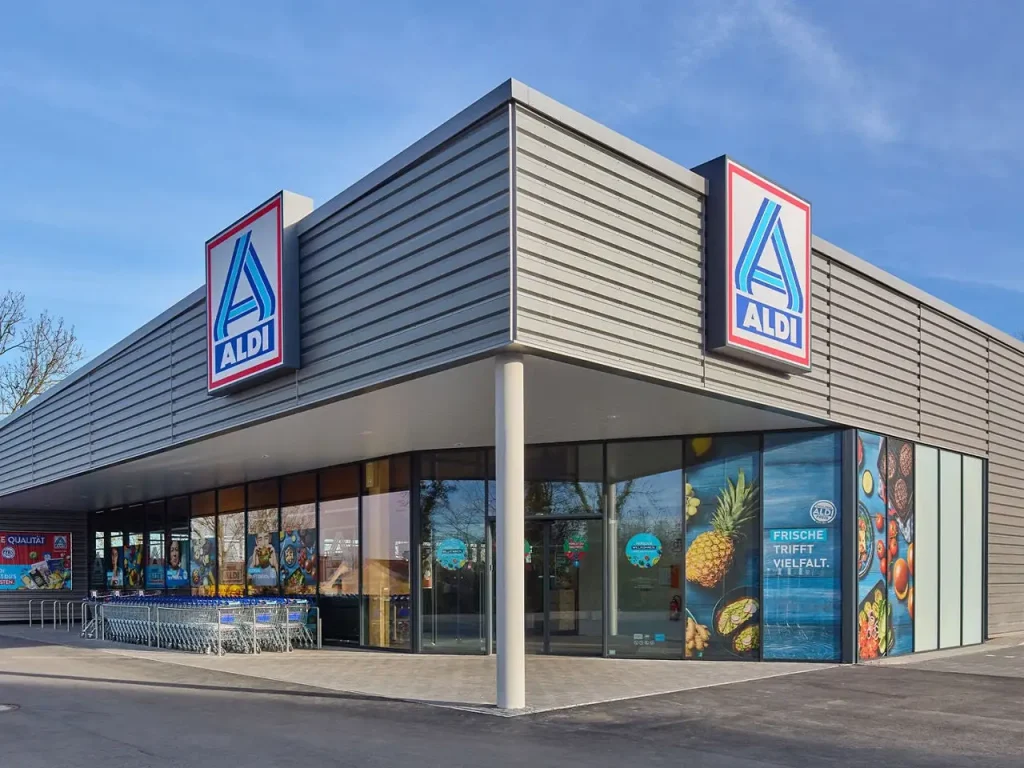
OVERVIEW OF THE ALDI NORD GROUP
Background
ESG Reporting Across International Group Structures
The ALDI Nord Group operates in eight European countries with over 5,500 stores. Materiality assessments must be documented in a traceable manner, and ESRS data from different countries, systems, and departments must be consolidated. At the same time, it should be transparent for each disclosure where the data comes from, who is responsible for it, and what supporting documentation is available. A centralized and structured process is therefore necessary.
Selection Decision
Why ALDI Nord Chose CONSUST
With FramesCube, materiality analysis, CSRD reporting, and CO₂ accounting can be managed using a single, centralized database.
Project Scope
Three modules, one shared database
Materiality analysis, CSRD reporting, and CO₂ accounting are all integrated within FramesCube.
MODULE 01
Double Materiality Analysis
In FramesCube, impacts, risks, and opportunities along the value chain are identified, assessed, and documented in a traceable manner. This creates a verifiable basis for selecting material topics.
Result: A well-founded list of material topics from which the relevant reporting requirements are derived.
MODULE 02
CSRD Reporting in Accordance with ESRS
The relevant list of data points is derived from the key topics. Responsibilities, explanations, and processing statuses are maintained directly for each data point within the software.
Result: A consolidated draft report containing information that can be traced back to its sources.
MODULE 03
Corporate Carbon Footprint
The group-wide carbon footprint is calculated in FramesCube in accordance with the GHG Protocol. It covers Scope 1 and 2 as well as selected Scope 3 categories, including emission factors, assumptions, and documented calculation methods.
Result: Traceable climate data that is also incorporated into the ESRS E1 reports.
SYNERGIES
A single database for all three modules
DMA, ESRS reporting, and CO₂ accounting are interconnected. Changes to key topics are directly incorporated into the data point catalog, while relevant climate data is used for reporting.
Result: Fewer interfaces, less coordination effort, and a consistent database.
Procedure
Here’s how the project is structured
The project begins with clear structures, defined responsibilities, and a shared data foundation.
Phase 01
Mapping Structure and Roles
First, the organizational structure, companies, and reporting levels are mapped in FramesCube. Responsibilities and access rights are based on the actual organizational structure.
Phase 02
Analyzing Materiality
Impacts, risks, and opportunities are documented in a transparent manner. The results form the basis for the rest of the reporting process.
Phase 03
Getting Started with Data Collection Efficiently
Relevant data points are assigned to the appropriate personnel and supplemented with explanations. Data collection then begins across countries and departments, accompanied by training sessions for the teams involved.
Phase 04
Consolidate the carbon footprint and report
The corporate carbon footprint is calculated and included in the climate-related disclosures.
CONCLUSION
What Other Companies Can Learn From This
Regardless of company size and the number of locations, similar success factors apply whenever multiple companies report jointly.