DMA Software
Conduct a dual materiality analysis in less than 7 days and automatically derive ESRS data points
With the DMA software, you can conduct your materiality analysis in a structured manner and in compliance with the CSRD. Guided stakeholder surveys, an integrated IRO database, and the automatic derivation of relevant ESRS data points quickly lead you to transparent results.

LEADING ESG TEAMS RELY ON CONSUST





Challenges
What Holds Companies Back Every Day When It Comes to Materiality Analysis
Advantages
What You Can Achieve with Our DMA Software
Days until the DMA is complete
From the long list to the derivation of ESRS data points, you’ll be guided through the entire process seamlessly, without any media breaks.
less manual work
The manual step of deriving the ESRS data points from your key aspects is no longer required.
Auditability
Every step of the analysis is documented and can be forwarded directly to your auditor in the integrated audit section.
Process
A 5-Step Guide to a Dual Materiality Analysis
From the initial stakeholder survey to the final ESRS data point list: The entire DMA process is guided and carried out within a single software application, without Excel spreadsheets or data discontinuities.
Step 1
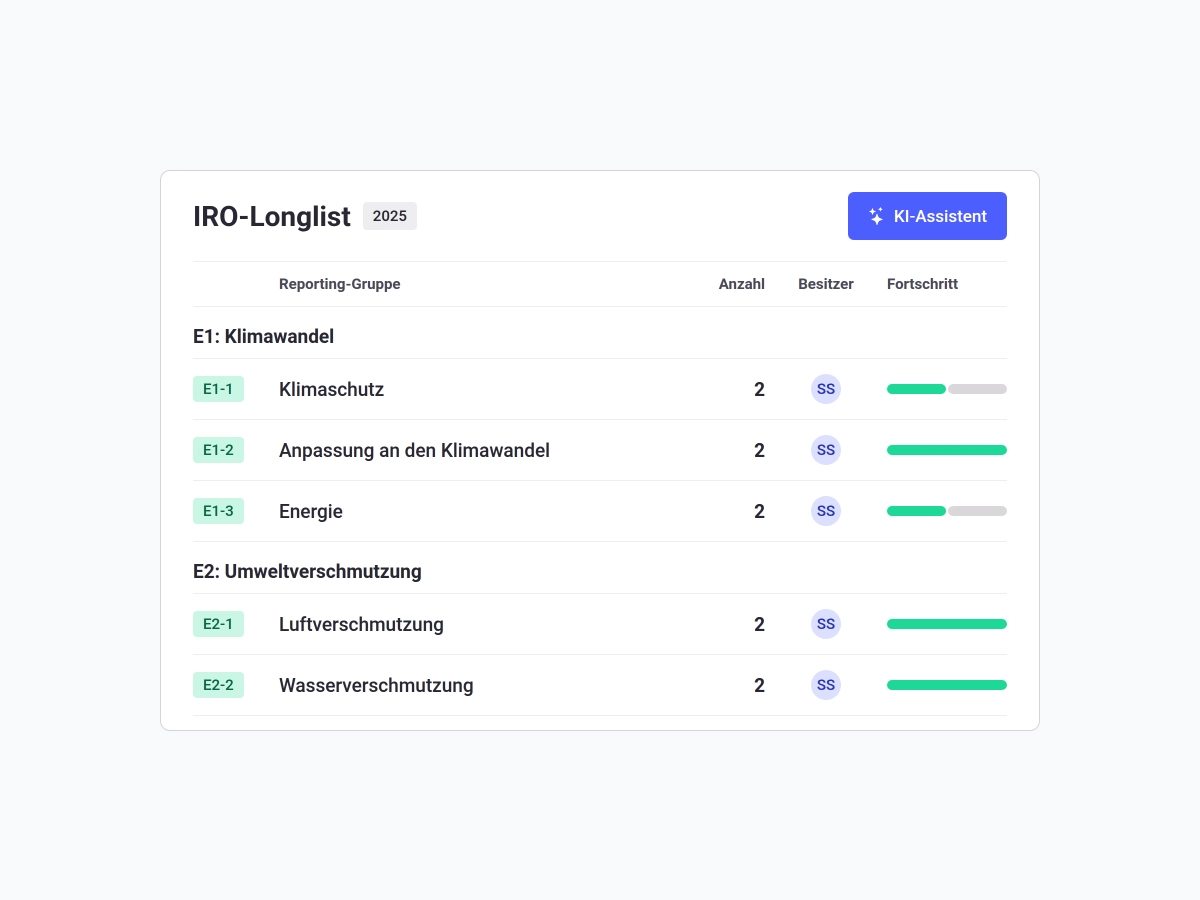
Create a long list of sustainability factors
Through a guided process, you will examine your operational activities, your business model, and your supply chain. In doing so, you will identify stakeholders and compile a long list of relevant sustainability aspects.
Step 2
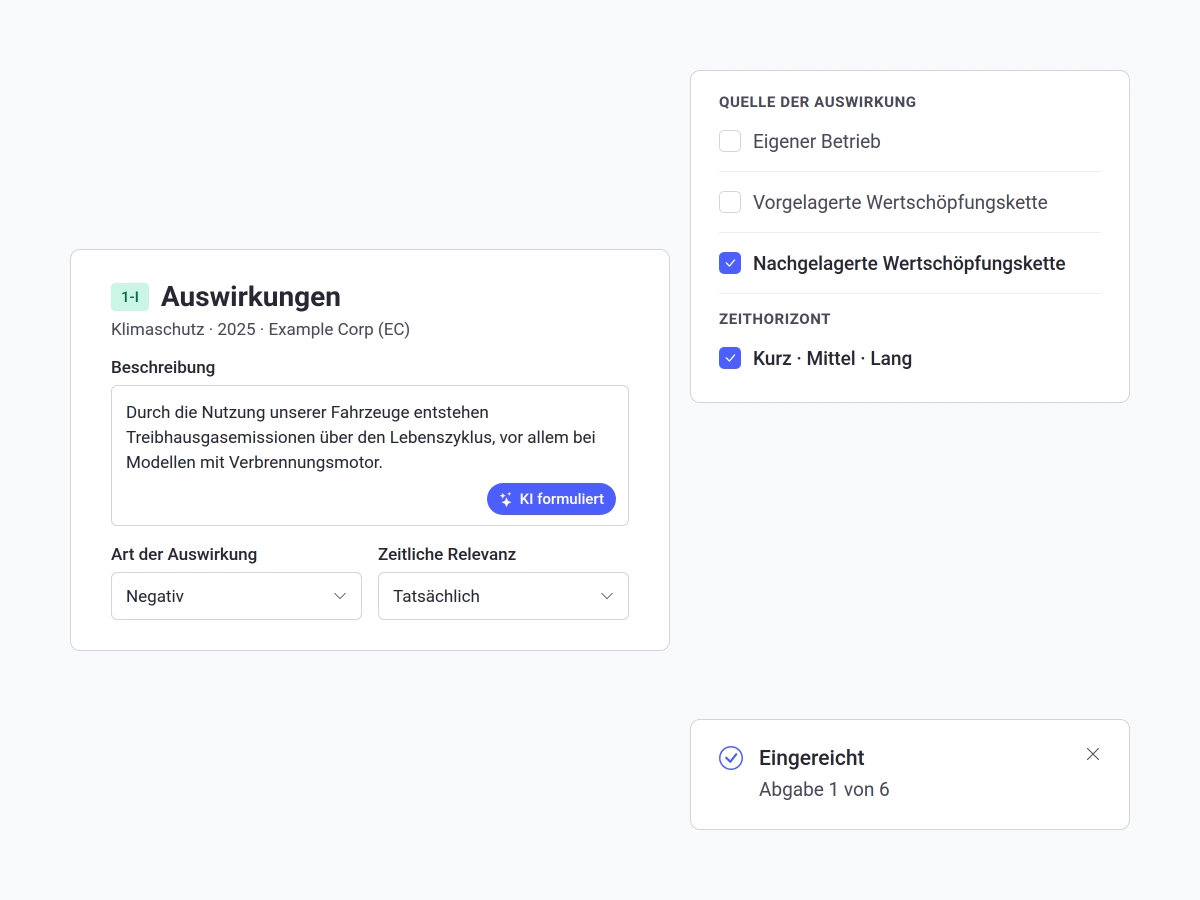
Identify Impacts, Risks, and Opportunities (IROs)
Your stakeholders enter company-specific IROs. The integrated IRO database, which contains over 200 examples, and the automatic generation feature powered by FramesCube AI significantly streamline the process. Assignment to responsible parties is automated.
Step 3
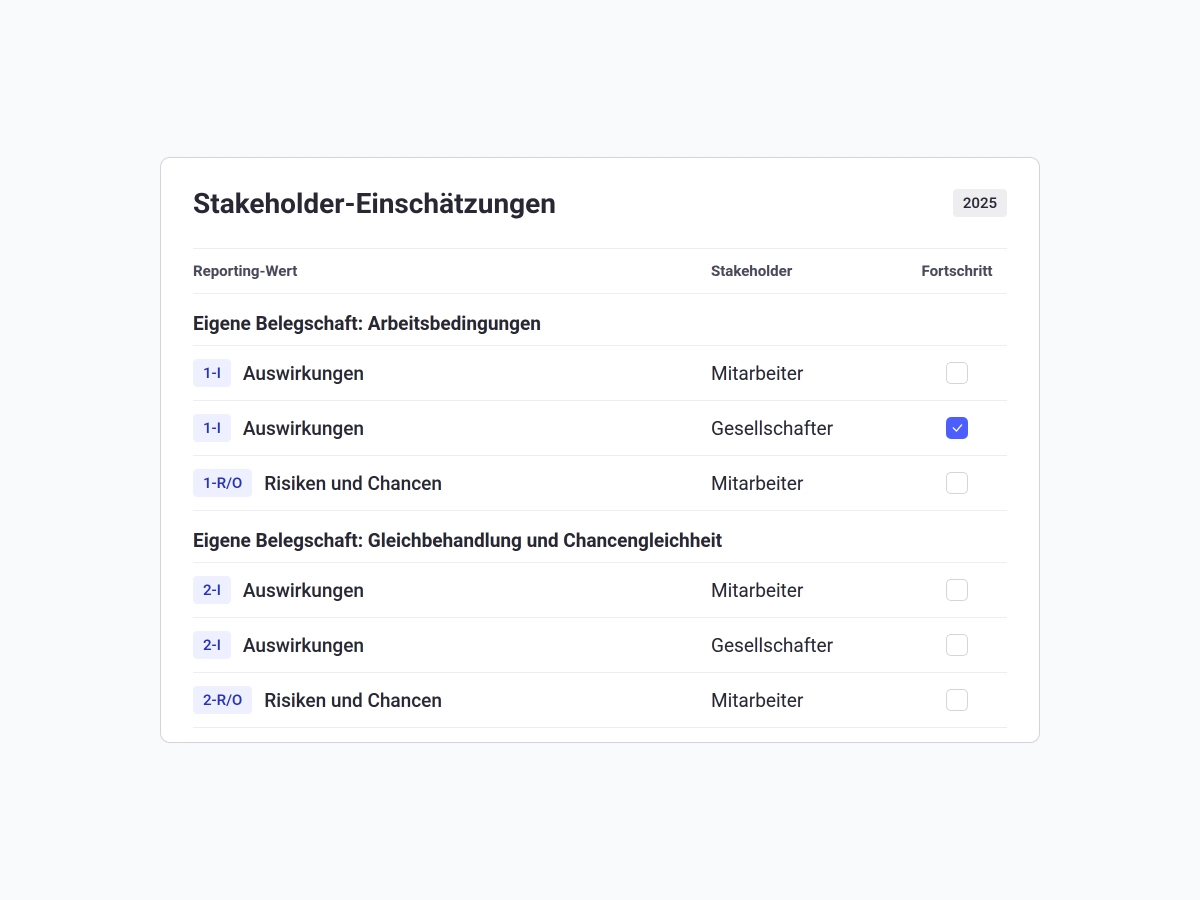
Evaluating IROs Based on Effective Stakeholder Engagement
Internal and external stakeholders evaluate the identified IROs directly within the software. Standardized evaluation grids, automatic reminders, and the centralized consolidation of all feedback ensure efficient coordination and transparent results.
Step 4
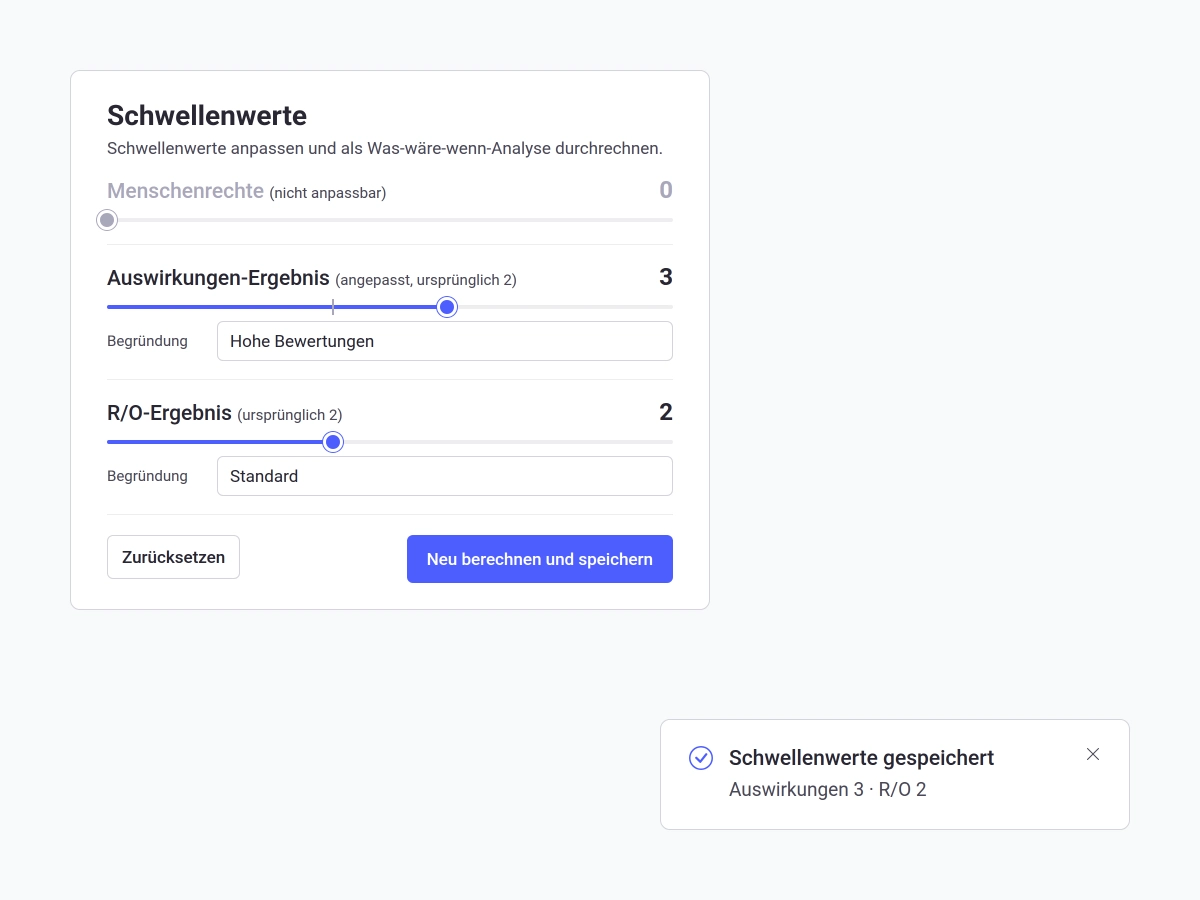
Set dynamic thresholds in the tool
You can dynamically adjust the thresholds after the fact to perform “what-if” analyses and flexibly tailor the subsequent reporting effort to your level of ambition.
Step 5
Derive relevant data points
Based on the key sustainability aspects, you automatically derive the relevant ESRS data points, select optional and phased-in data points, and have the analysis audited using the integrated DMA report.
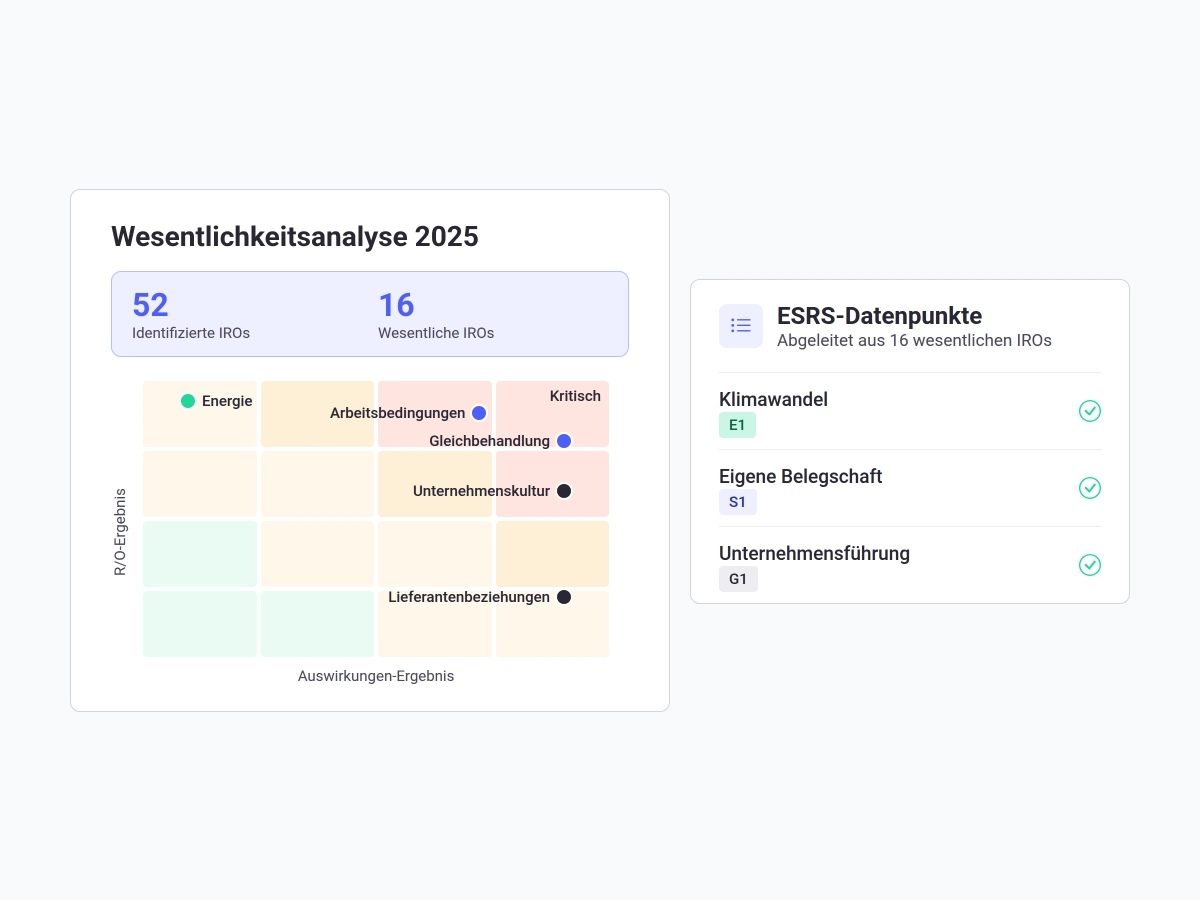
Key Features of Our DMA Software at a Glance
An unstructured materiality analysis takes time, complicates the audit, and jeopardizes the consistency of your CSRD data.
Solution
Why ESG Managers Rely on CONSUST for Their DMA
CONSUST combines software and ESG expertise into a comprehensive package. That’s what sets it apart from yet another standalone solution and makes it a DMA you can rely on for the long term.
Customer Testimonials
100% of our customers are satisfied
What drives us: satisfied customers with whom we build long-term, trusting relationships.
 “We’ve had a very positive experience with CONSUST FramesCube. We’re particularly impressed by CONSUST’s quick response times and expert support, which provides us with practical assistance when we have questions and makes it much easier to implement our ESG requirements.”


, Schwan Cosmetics
 “CONSUST’s FramesCube ESG software and consulting services optimally map our specific ESG requirements and processes, despite our complex organizational structure.”

, HANNING & KAHL
Part of our FramesCube
All-in-One ESG Solution
FAQ
Frequently Asked Questions About DMA Software
The most important questions our customers have about the dual materiality analysis and how our DMA software specifically supports the process.