SUPPLY CHAIN HUB
Collect supplier data once and use it to meet all your supply chain needs
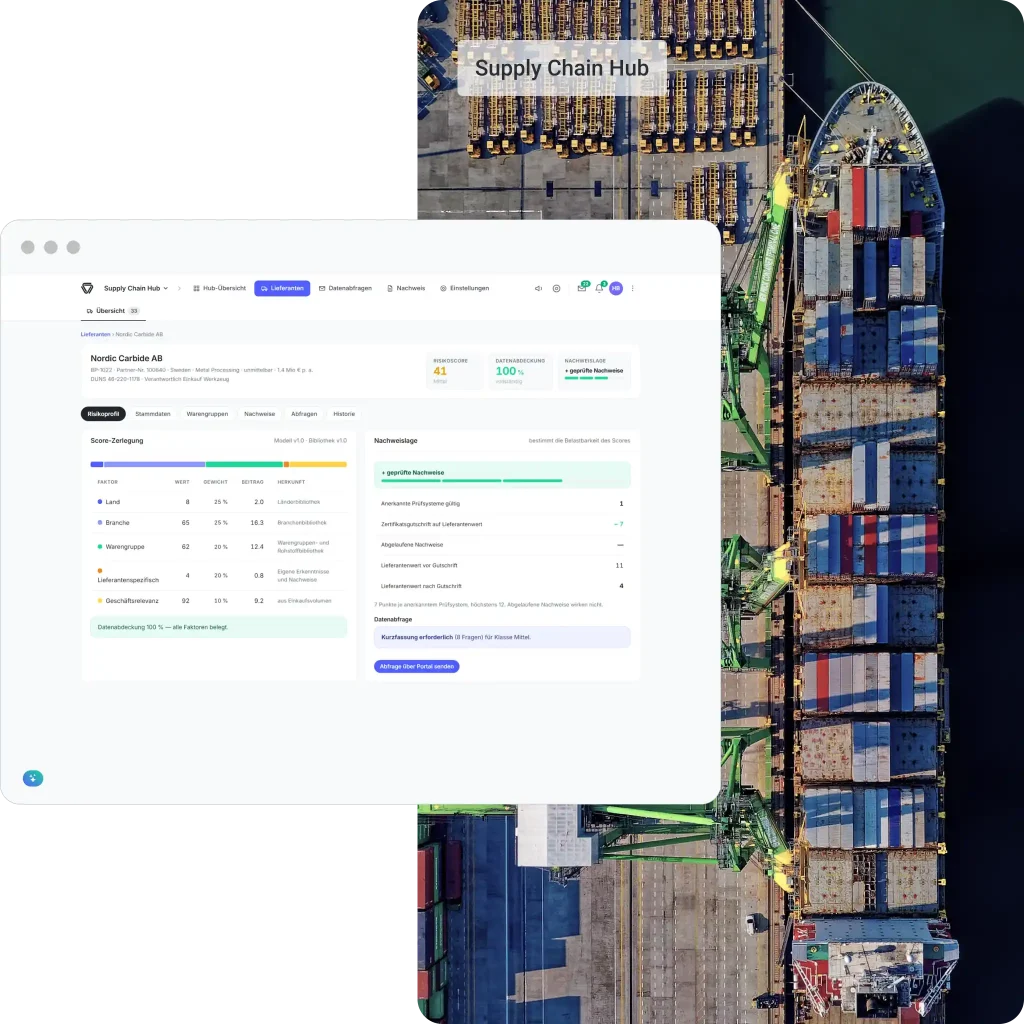
The Supply Chain Hub is the supplier module in FramesCube: Create and contact suppliers, send customized questionnaires, collect data and supporting documentation, and analyze responses. With accurate data collection, you can fulfill due diligence requirements, track CO₂ emissions, manage packaging, address deforestation, and handle imports—all without having to implement a separate tool for each topic.
LkSG • CSDDD • EUFLR • EUDR • CBAM • CCF & PCF • PACT • PPWR
Leading supply chain experts rely on CONSUST





Challenges
Why Supplier Data Management Takes So Much Time
Advantages
What You Can Achieve with the Supply Chain Hub
Requirements in a Solution
Cover LkSG, CSDDD, EUFLR, EUDR, CBAM, CCF, PCF, and PPWR with a centralized data collection system.
Supply Chain Transparency
Keep track of all supply chain risks, documentation, measures, and return rates in one place.
Quickfeedback
Suppliers respond to inquiries directly on the portal and upload supporting documentation directly to the relevant data point.
PLATFORM
Supplier data: Collected once, used many times
One supplier database, one questionnaire process, one document repository—and six areas that benefit from them.

Due Diligence Requirements (LkSG, CSDDD)
Prioritize suppliers based on risk, obtain self-declarations, guidelines, and certificates, and track measures in an audit-proof manner.

Packaging (PPWR)
Centrally track the material composition, recycled content, weights, and recyclability of packaging.
Forced Labor (EUFLR)
Record and document production sites, subcontractors, working conditions, as well as supplier audits and certifications.

CO₂ Data (CCF, PCF, PACT)
Collect primary data and PCF values directly from suppliers and use them for corporate and product carbon footprints.
Deforestation (EUDR)
Record DDS reference numbers, assign them to products and suppliers, and ensure the traceability of goods.
Import Compliance (CBAM)
Systematically collect facility-specific emissions data, calculation methods, and proof of CO₂ pricing from manufacturers.
Structured Workflow
From a Supplier Master File to a Reliable Database in 5 Steps
A guided process from the initial list of suppliers to data that you can reuse across multiple modules.
1
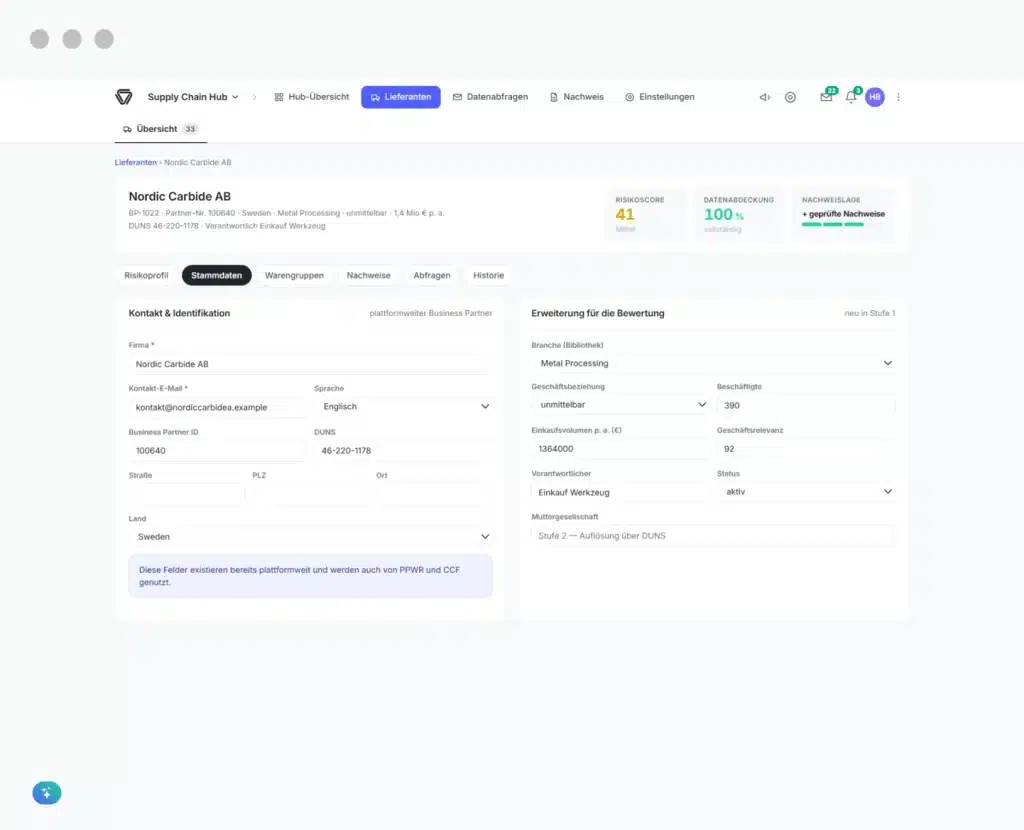
Create and Organize Suppliers
Existing lists are imported from the ERP system via Excel upload or the web API. Suppliers can be segmented by country, product group, location, and company—the foundation for everything that follows.
2

Assessing and Prioritizing Supply Chain Risks
Country and industry indices provide a risk score for each supplier. This results in a prioritized list that you can use to target your efforts—rather than querying the entire database uniformly.
3
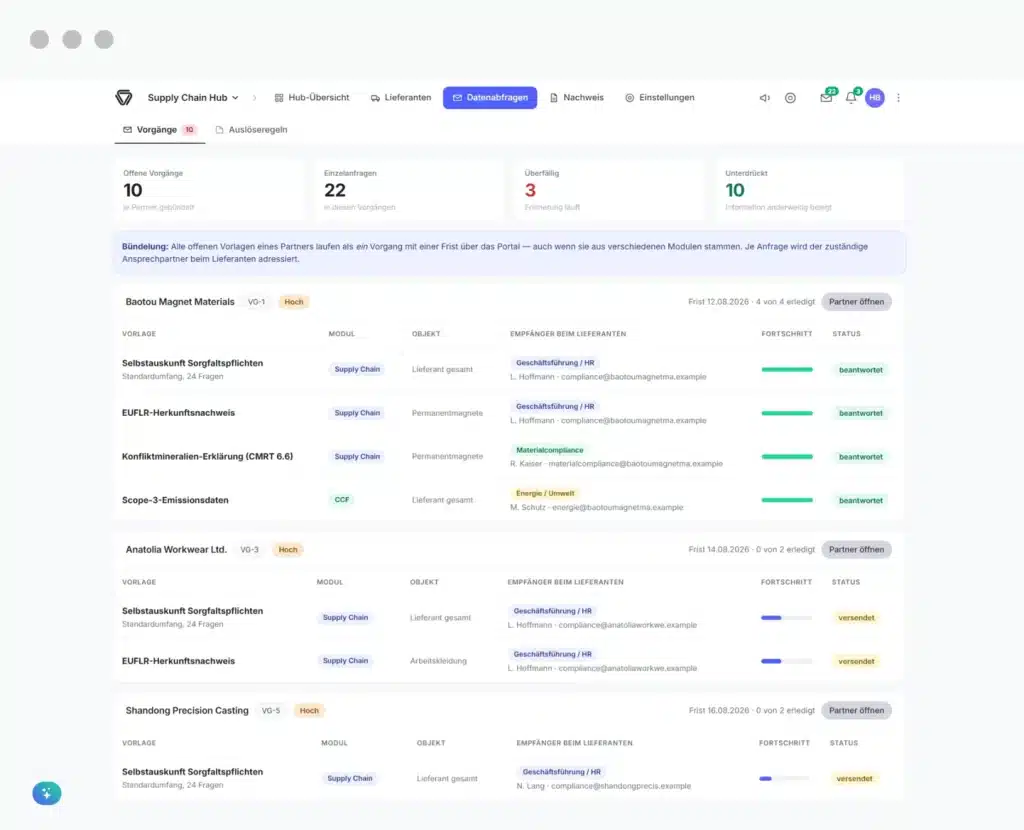
Contact suppliers and send out questionnaires
Templates or custom questionnaires are sent directly from the software to the appropriate contacts: in multiple languages, with included explanations, clear deadlines, and automatic reminders.
4
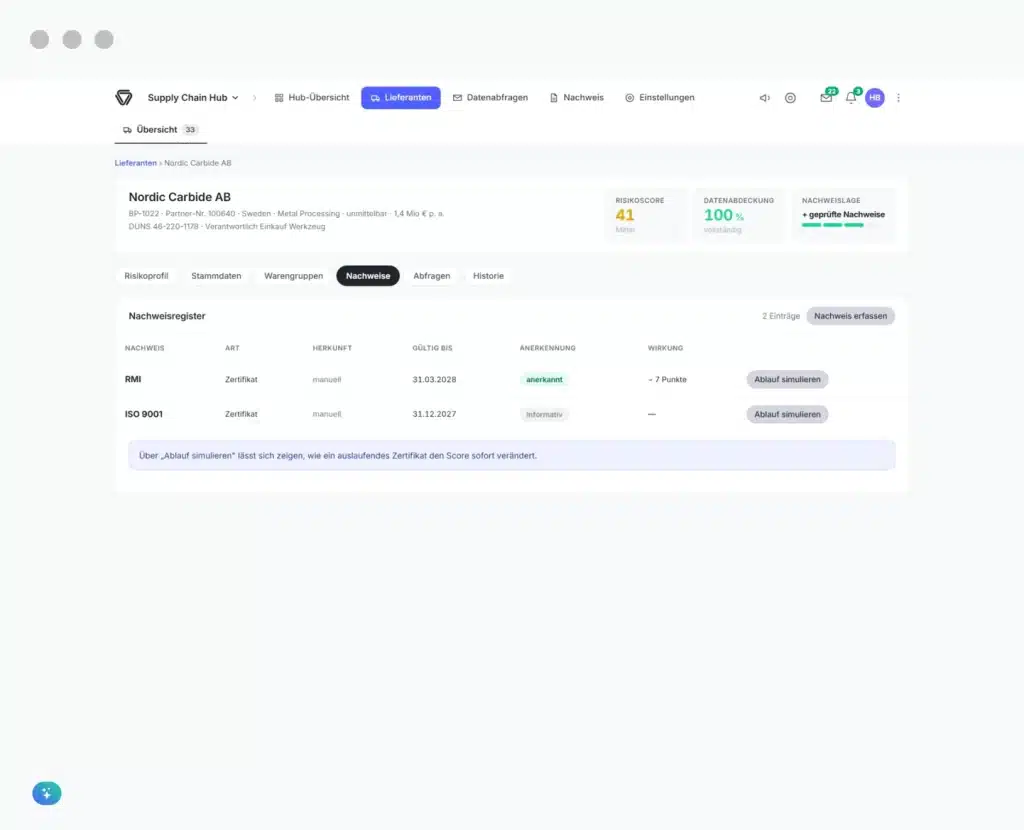
Record Feedback and Supporting Documentation
Suppliers respond via the portal and upload certificates, guidelines, and supporting documents directly. Documents are assigned to the inquiry, tagged with a validity date, and approved.
5
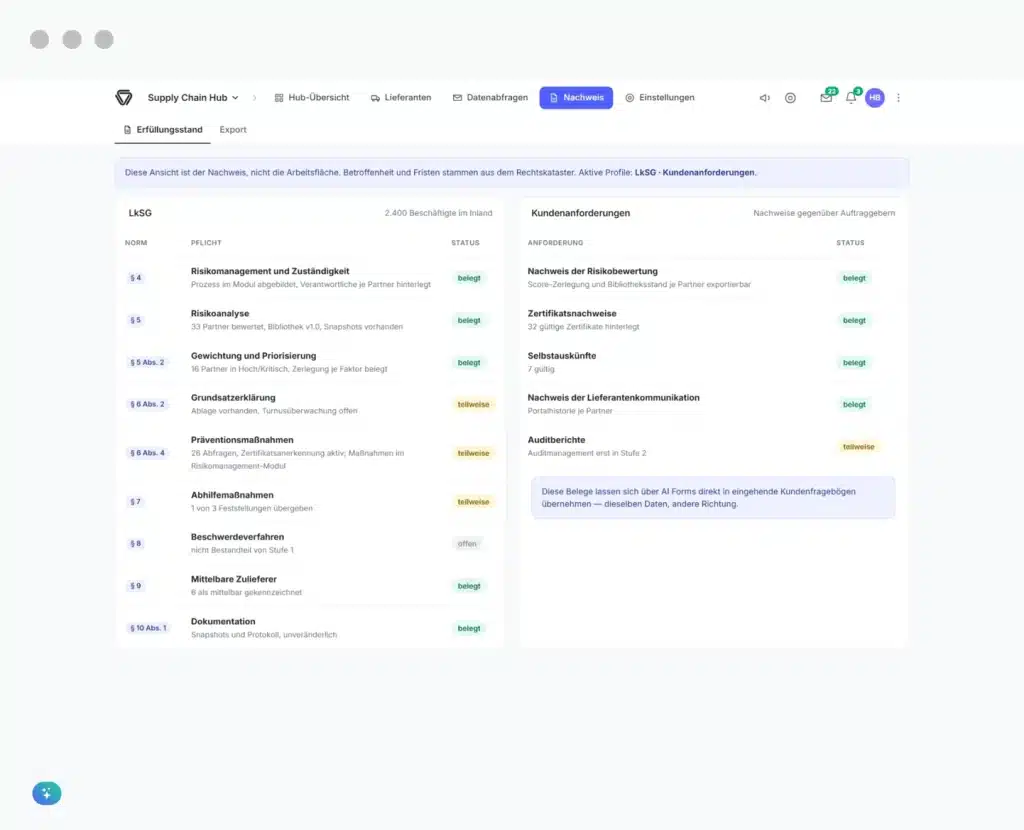
Analyze, Derive Actions, Reuse
Dashboards display response rates, data quality, and open items. Discrepancies lead to actions assigned to specific individuals with deadlines. The data is available to the other FramesCube modules.
Key Features of the Supply Chain Hub Module at a Glance
PARTNERSHIP
In partnership with Prewave: Identifying risks before they appear in the questionnaire

Questionnaires provide structured self-reported information. External risk signals fill in the gaps. That’s why we partner with Prewave—a leading platform for AI-powered supply chain risk intelligence that analyzes public sources worldwide and in many languages.
This combination results in a comprehensive approach: Prewave continuously monitors what is happening with your suppliers, while the Supply Chain Hub collects data and documentation directly from them.
In practical terms, this means that downstream market participants who collect and store DDS reference numbers will find the Supply Chain Hub to be a valuable tool. First-market-placers, who bear the full burden of EUDR due diligence, can rely on Prewave to provide the necessary level of support—all from a single source.
Multiple orders,
the same suppliers.
Just ask.
Solution
What Sets the CONSUST Supply Chain Hub Apart from Other Supply Chain Solutions
Many solutions address only individual requirements. The CONSUST Supply Chain Hub creates a central database for supplier information and reduces the workload for both suppliers and internal teams.
Customer Testimonials
100% of our customers are satisfied
What drives us: satisfied customers with whom we build long-term, trusting relationships.
 “We’ve had a very positive experience with CONSUST FramesCube. We’re particularly impressed by CONSUST’s quick response times and expert support, which provide us with practical assistance when we have questions and make it much easier to implement our ESG requirements.”


, Schwan Cosmetics
 “CONSUST’s FramesCube ESG software and consulting services optimally map our specific ESG requirements and processes, despite our complex organizational structure.”
, HANNING & KAHL
Part of our FramesCube
All-in-One ESG Solution
FAQ
Frequently Asked Questions About the Supply Chain Hub. Our Answers.
The most important answers regarding supplier data collection for due diligence requirements, carbon footprints, and packaging.