EMAS Software
Centralized EMAS Management: From Data Consolidation to the Environmental Statement
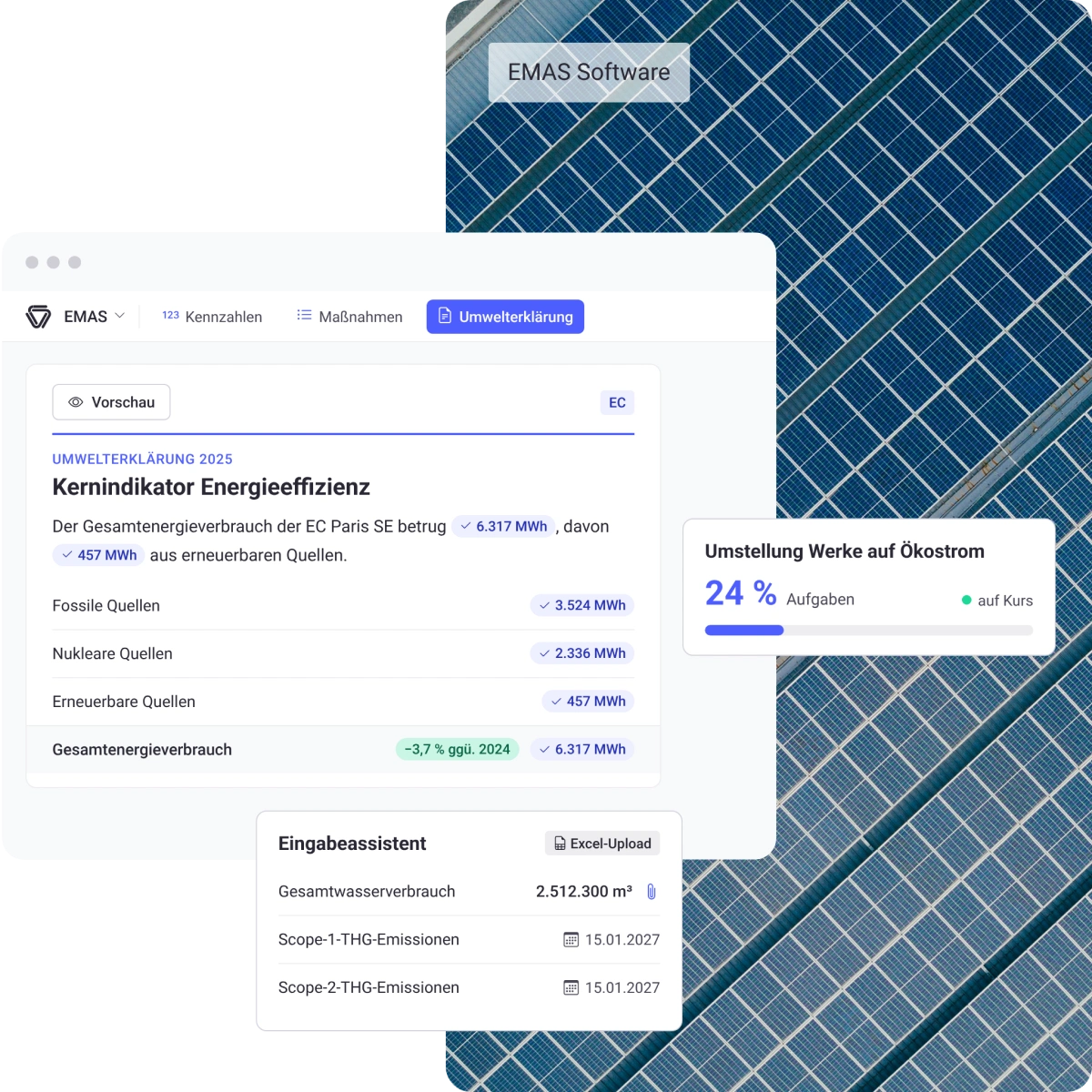
With FramesCube, environmental managers and sustainability officers can consolidate all environmental aspects, key performance indicators, and measures in one place. The software structures the entire EMAS process and automatically compiles your data into a transparent and verifiable environmental statement.
LEADING ESG TEAMS RELY ON CONSUST




Challenges
What Holds Companies Back in Their Daily EMAS Work
Advantages
What You Can Achieve with CONSUST
Direct Link to ISO 14001 and CSRD
Environmental aspects, regulatory records, and management processes are maintained once and used for ISO 14001, EMAS, and CSRD alike.
Less effort required for the environmental report
FramesCube generates the environmental statement in a structured manner using key metrics and measures that have already been recorded, rather than compiling it manually.
Improvement is visible and verifiable
Key indicators are documented, compared, and evaluated over several reporting cycles. This ensures that the required evidence of improvements in environmental performance is available at all times.
A Solid Foundation for Validation
The audit trail and version history provide the environmental verifier with a complete record of how data was generated and who approved it.
Process
5 Steps to a Validated Environmental Statement
From identifying environmental aspects to producing a validated environmental statement, FramesCube guides you through a clearly structured process. Each step builds on the previous one and reduces the effort required for the next EMAS reporting period.
Step 1
Set Up Data Structure and Environmental Aspects
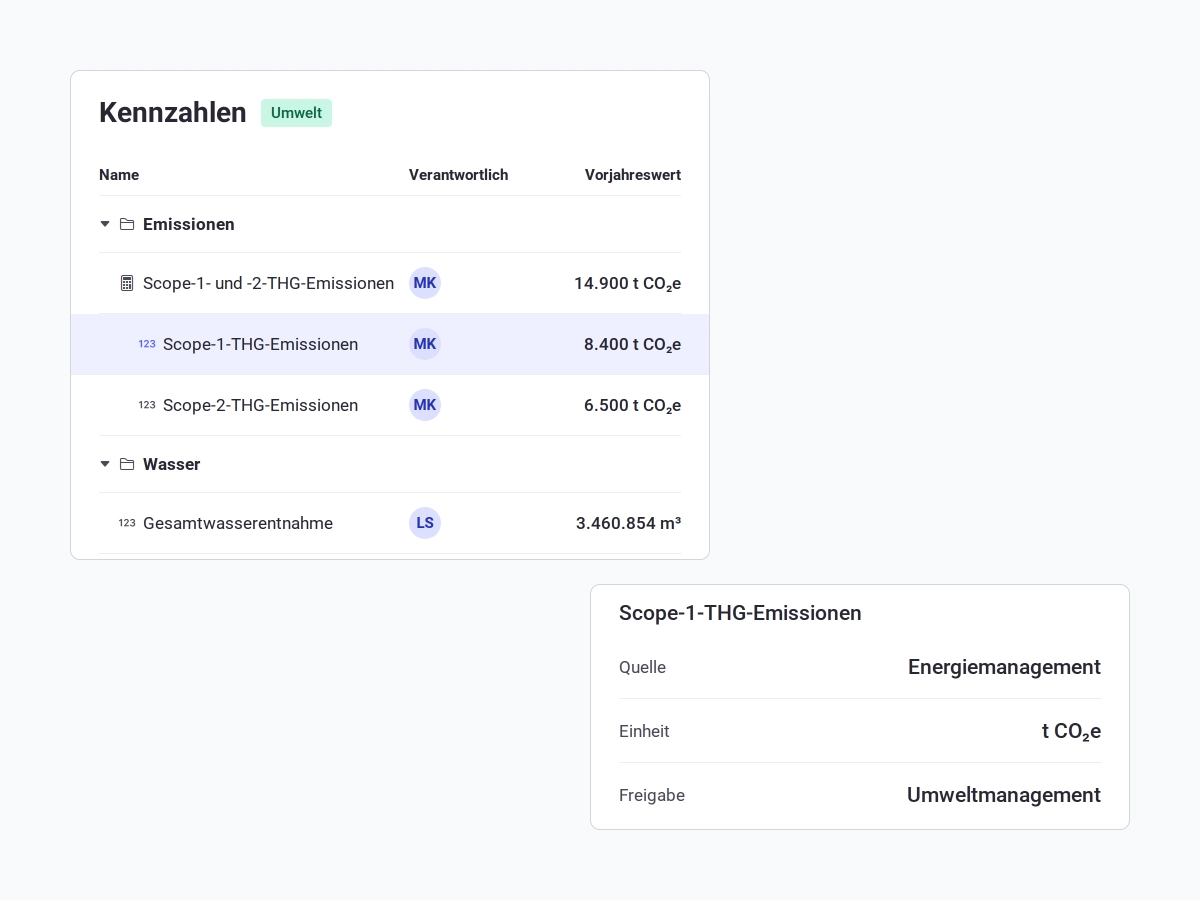
Direct and indirect environmental aspects are assessed for each site and mapped within your organizational structure. Each data point is assigned a source, unit, responsible party, and approval workflow.
Step 2
Collect EMAS Data Centrally and with AI Support
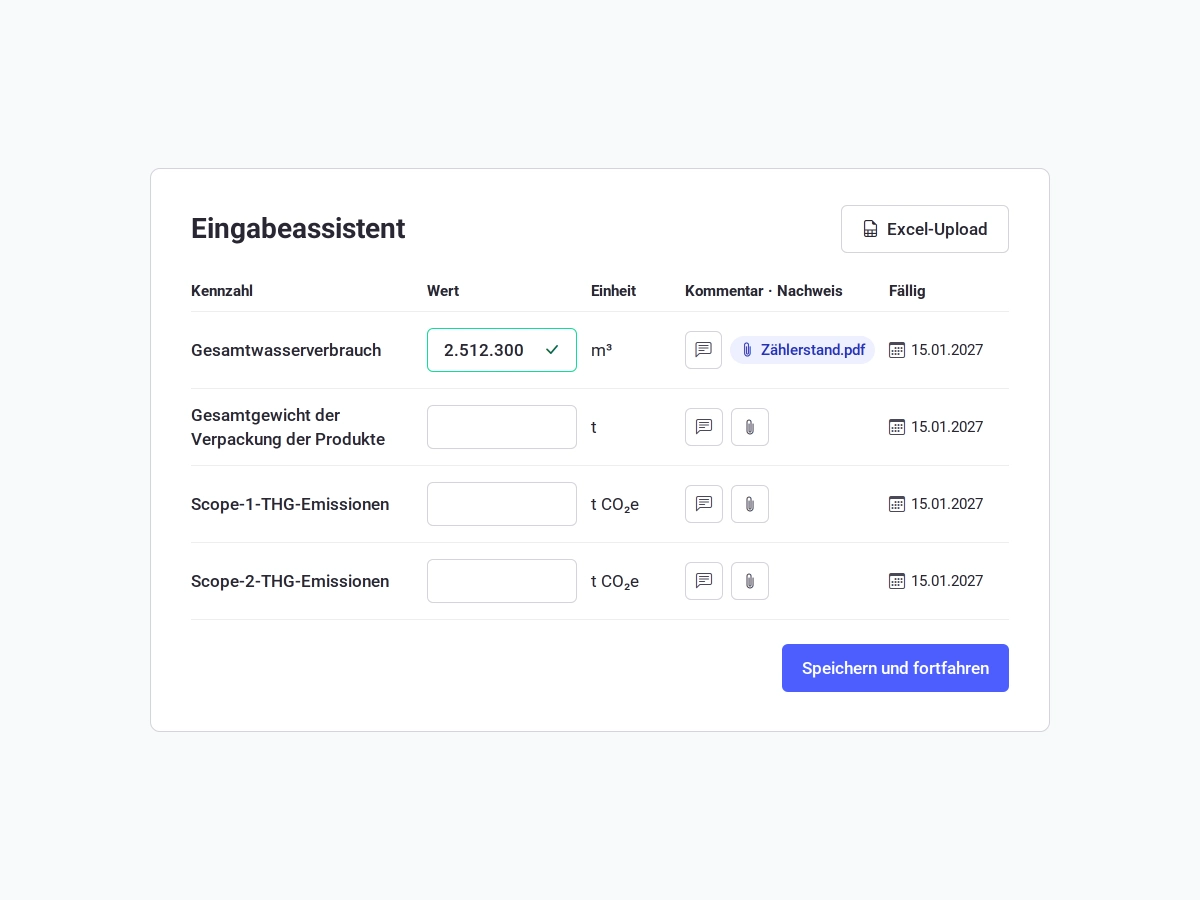
Data on energy, materials, water, waste, emissions, and land use are entered by site managers. The AI-powered data collection system automatically imports supporting documentation.
Step 3
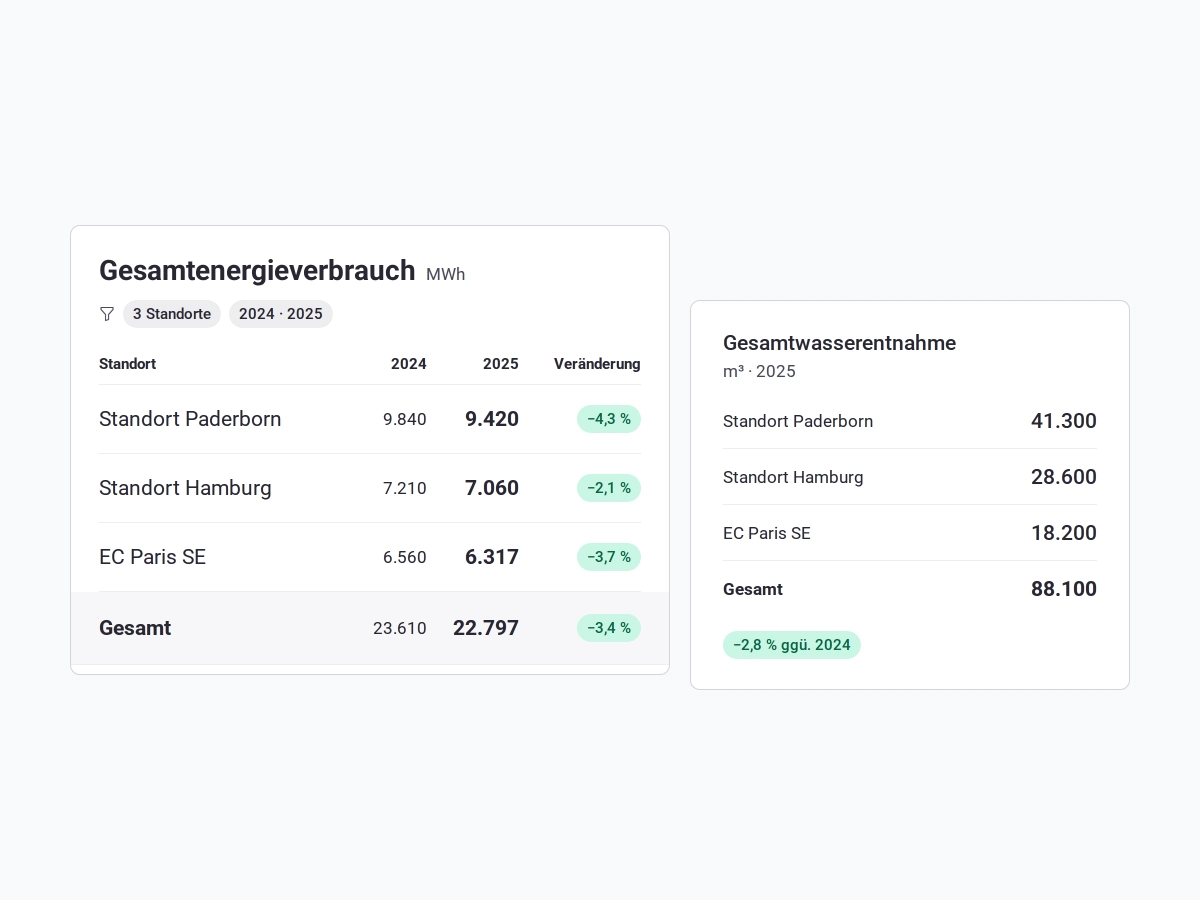
Consolidate data and identify key indicators
Values are aggregated across locations and time periods, and environmental metrics are linked to reference values for key indicators. The methodology remains consistent over the years.
Step 4
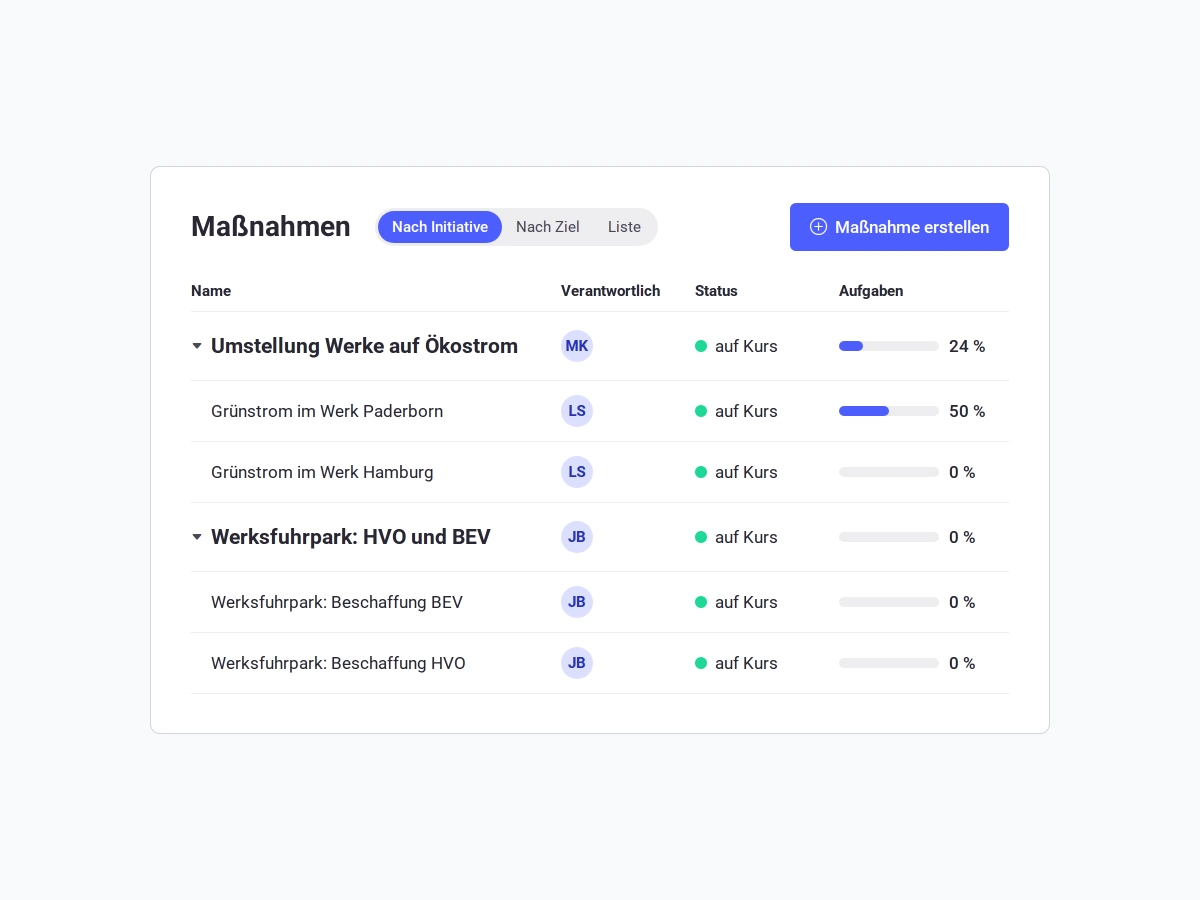
Setting Goals and Managing Actions in a Structured Way
You can derive measurable environmental goals—including a base year and a designated person responsible—directly from the consolidated data. Actions are defined with a deadline, budget, and expected impact.
Step 5
Prepare an Environmental Statement and Have It Validated
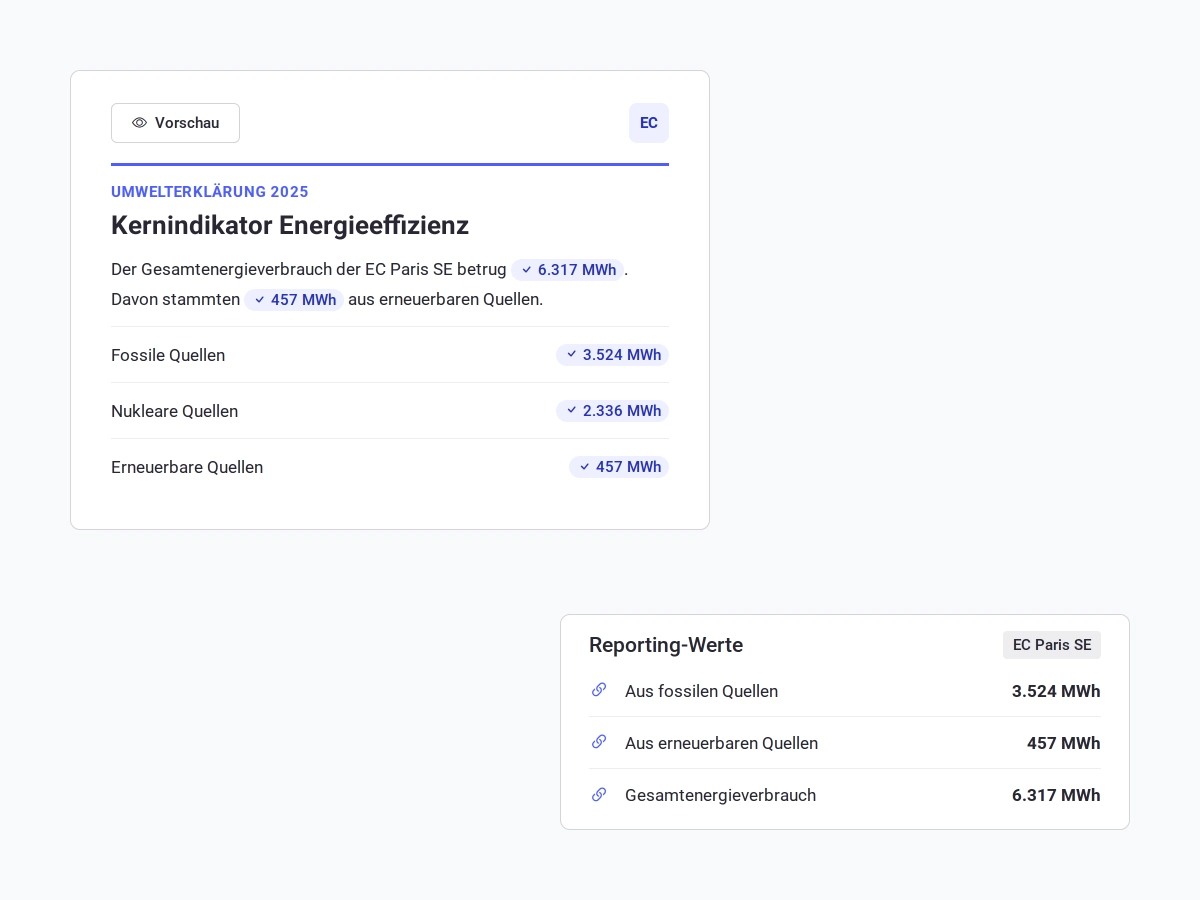
The environmental statement is based on a database that includes information on the organization, environmental aspects, goals, program, and key indicators compared over multiple years. The environmental verifier accesses supporting documents directly.
Key EMAS Features in FramesCube at a Glance
When the analyst asks about the source of a value, your data structure determines the answer
Solution
Why Environmental Managers Choose CONSUST
FramesCube integrates the requirements of ISO 14001 and EMAS into a single database. Instead of maintaining two systems in parallel, the environmental statement is generated directly from the data you collect for your environmental management anyway.
Customer Testimonials
100% of our customers are satisfied
What drives us: satisfied customers with whom we build long-term, trusting relationships.
 “We’ve had a very positive experience with CONSUST FramesCube. We’re particularly impressed by CONSUST’s quick response times and expert support, which provides us with practical assistance when we have questions and makes it much easier to implement our ESG requirements.”


, Schwan Cosmetics
 “CONSUST’s FramesCube ESG software and consulting services optimally map our specific ESG requirements and processes, despite our complex organizational structure.”

, HANNING & KAHL
Part of our FramesCube
All-in-One ESG Solution
FAQ
Your Questions About EMAS. Our Answers.
The most common questions from ESG managers regarding EMAS implementation with FramesCube.