CLIMATE RISK ANALYSIS Software
Assess Physical Climate Risks by Location—Traceable Through the Audit Process
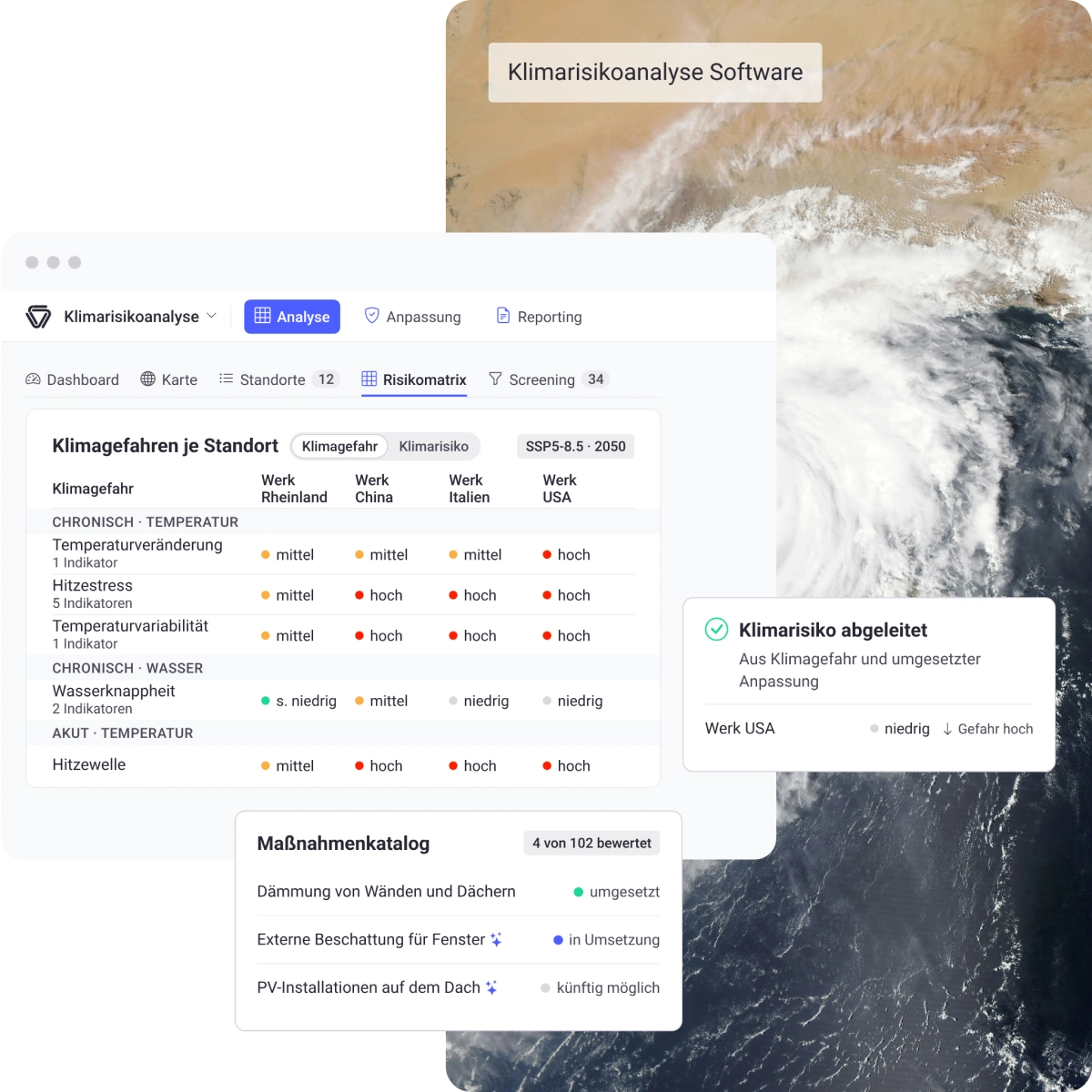
With the FramesCube Climate Risk Analysis module, you can assess all 28 climate hazards listed in the EU Taxonomy for each location, across three climate scenarios and three time horizons. Each classification shows which indicator triggered it. You can document adaptation solutions in the same system.
Leading ESG teams rely on CONSUST





Challenges
Typical Challenges in Conducting Climate Risk Analyses
Advantages
Your Benefits with CONSUST
Climate-related risks covered
All climate hazards according to Annex I, Appendix A of the EU Taxonomy, categorized by chronic and acute hazards, as well as by temperature, wind, water, and solids.
Combinations
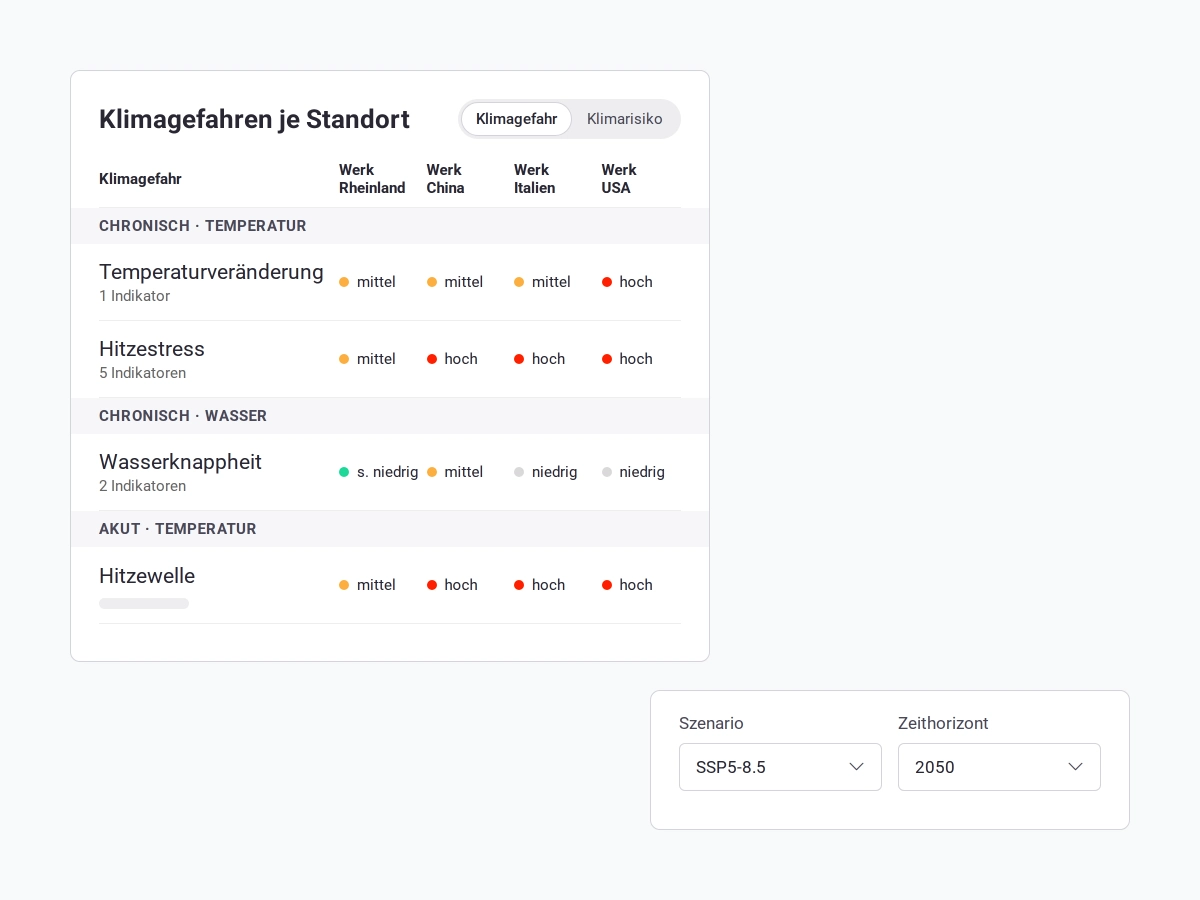
Three climate scenarios from the Intergovernmental Panel on Climate Change and three time horizons can be compared using a toggle switch, rather than placing files side by side.
visible derivation
Each evaluation displays the indicator, measured value, threshold, and the specific value that triggered the action. Rule-based, rather than hidden in formulas.
Consistent data set
The climate dataset is frozen and versioned. Years later, the same analysis yields the same result, complete with the date and the person responsible.
Process
5 Steps to a Robust Climate Risk Analysis
This module follows the approach we use in our climate risk analysis consulting services: the requirements of the EU Taxonomy Regulation, the 2022 guidelines from the Federal Environment Agency, and DIN EN ISO 14091.
Step 1
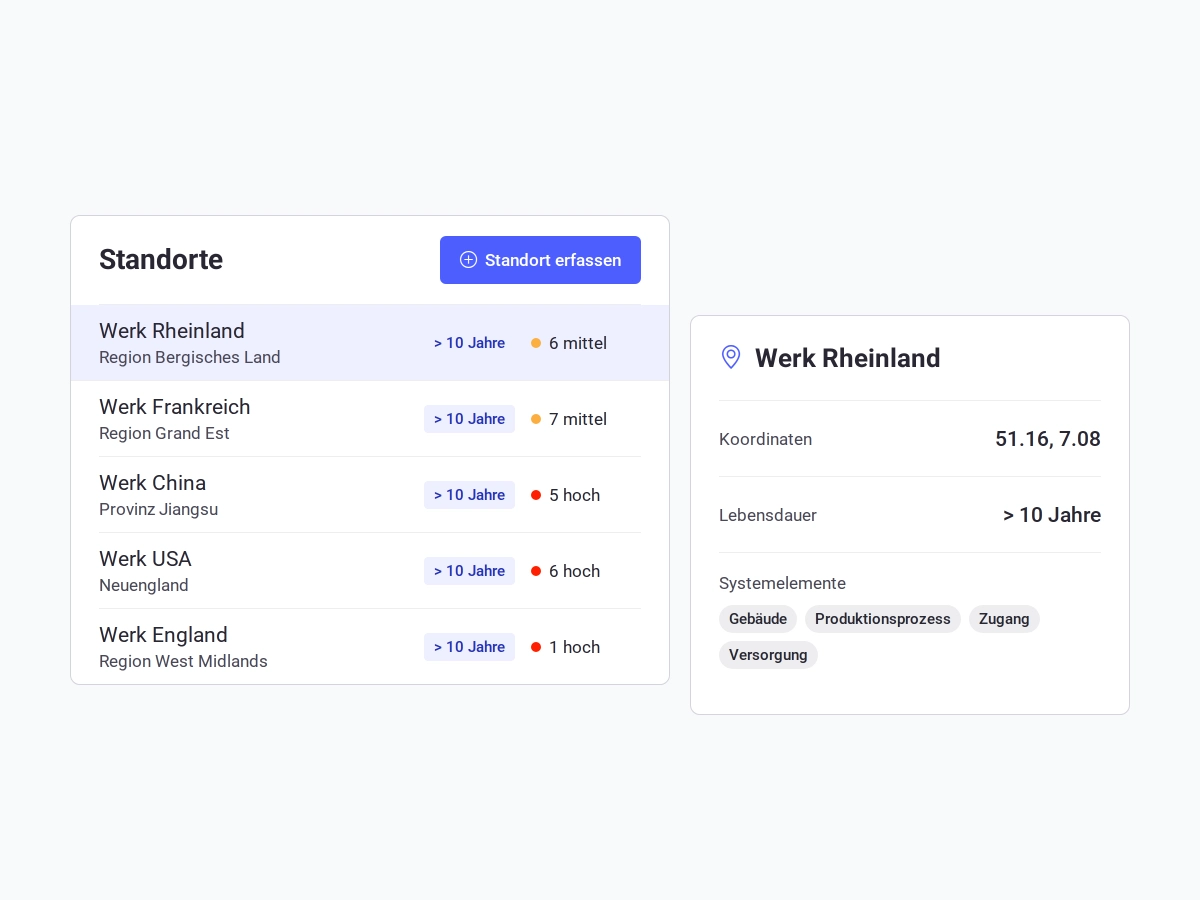
Record Locations and Determine Lifespan
Enter the geographic coordinates and specify whether the economic activity has a lifespan of more than or less than 10 years. Break down the sites into system elements such as buildings, production processes, access, and utilities.
Step 2
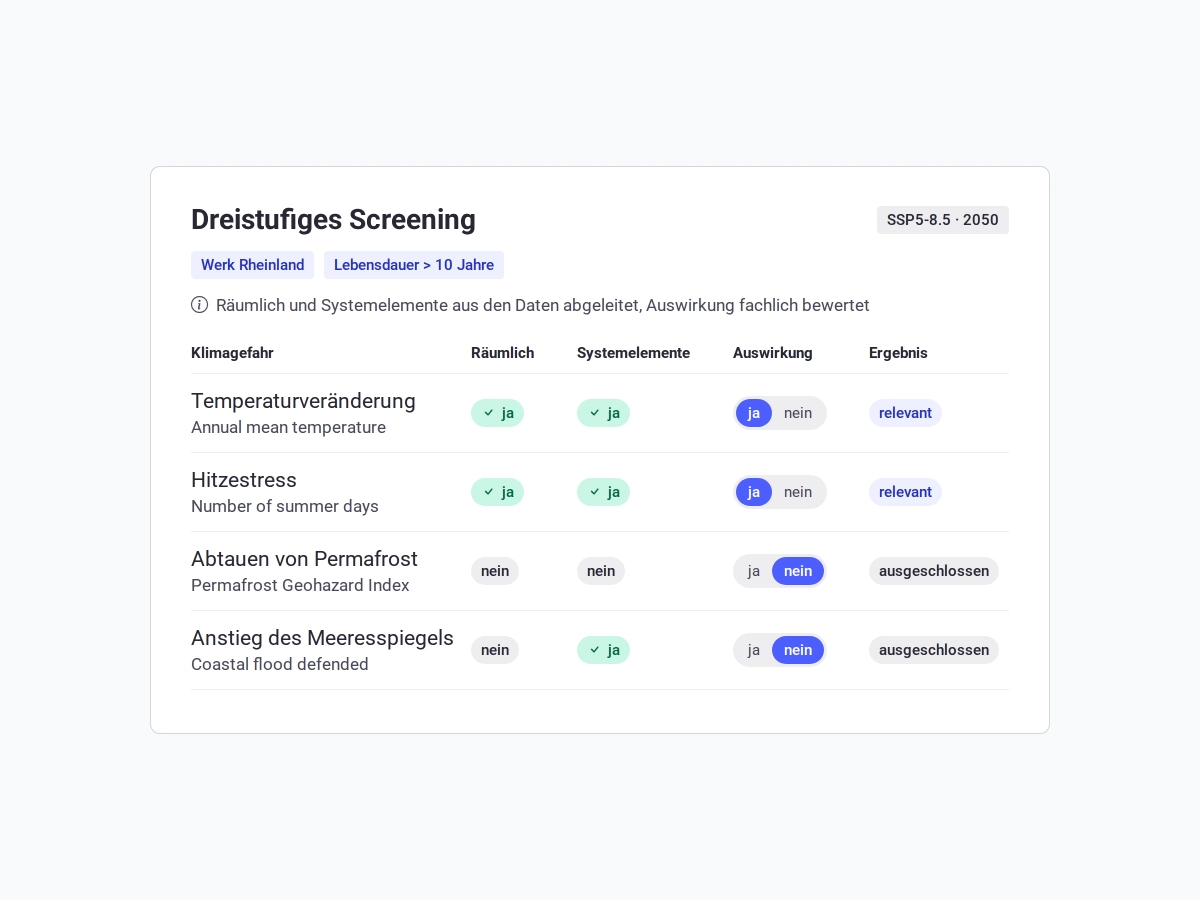
Conduct a three-step screening of the internal situation
The module derives spatial screening and system element screening from the data. Only the impact screening remains a technical decision. Any deviation from the proposal is documented along with the rationale.
Step 3
Analyzing Scientific Climate Data
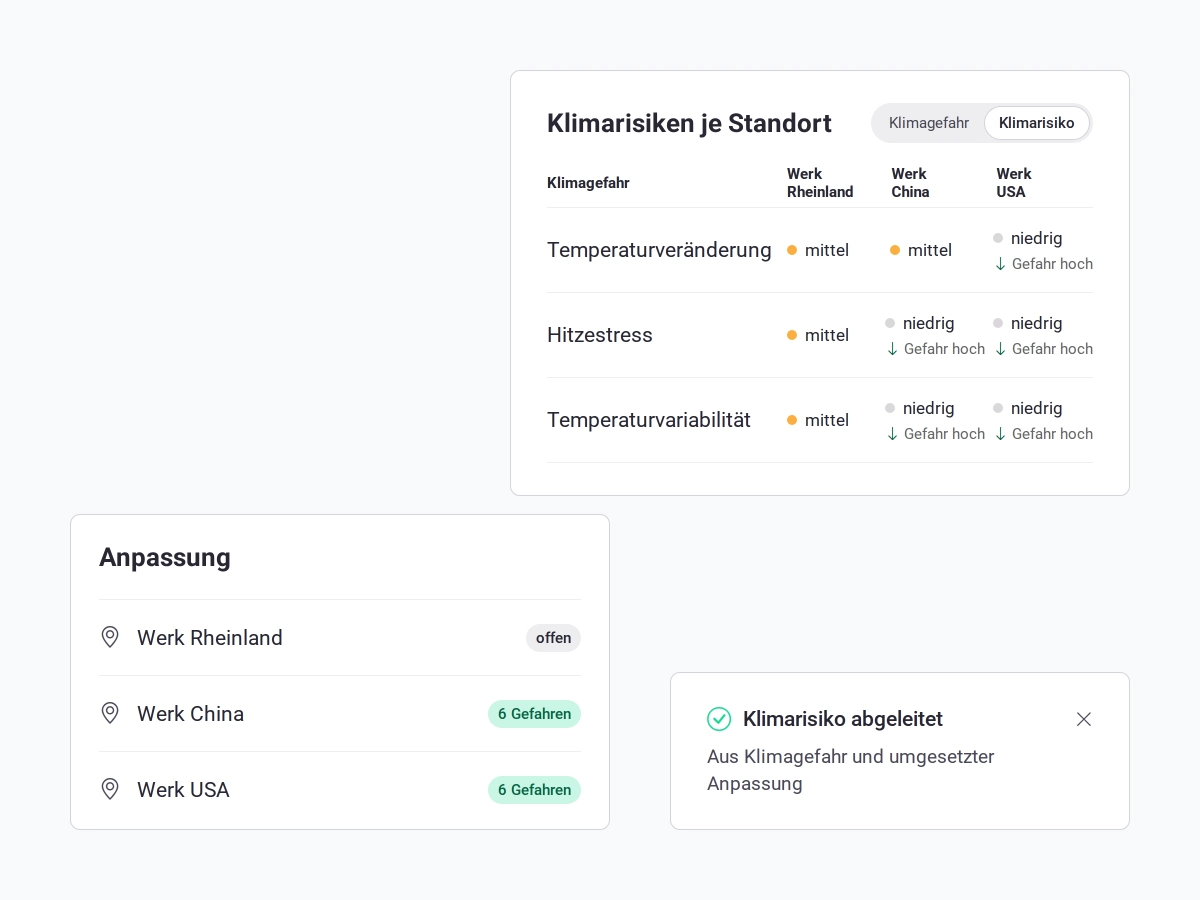
For each combination of location, hazard, scenario, and time horizon, the corresponding climate indicators are classified against predefined threshold values. The matrix displays the results for all locations side by side.
Step 4
Assess Vulnerability and Determine Climate Risk
A site questionnaire assesses local vulnerability. Climate risk—the metric that should be included in the report—is determined by climate hazards and the effectiveness of the adaptation measures implemented.
Step 5
Document and track customization solutions
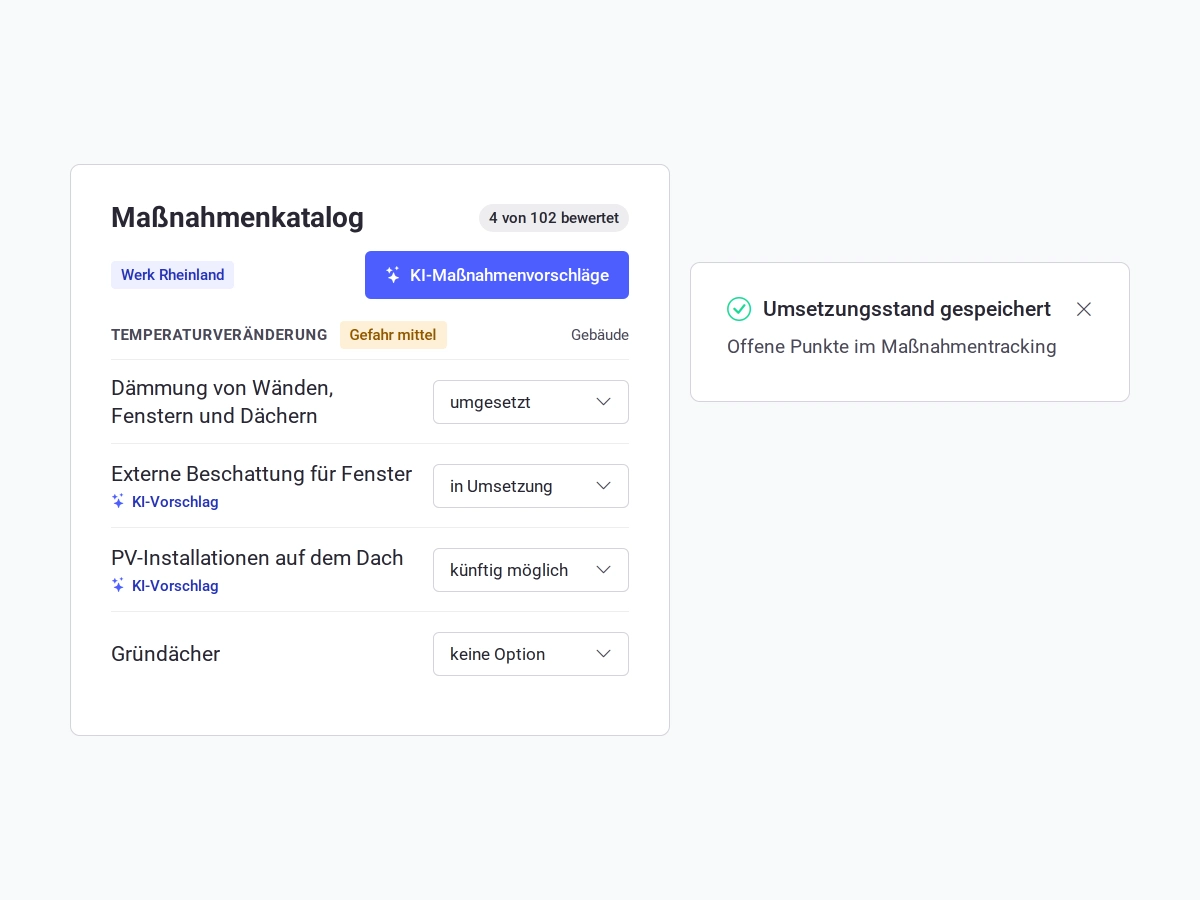
A catalog containing more than 100 structural and organizational measures is available. You maintain the implementation status for each location; outstanding items appear in the FramesCube action tracking system.
Key Features of Our Climate Risk Analysis Software at a Glance
Assess, document, and proactively mitigate climate risks at all locations.
Solution
Why ESG Managers Use CONSUST to Manage Their Climate Risks
Methodology, climate data, and software are all interconnected. You conduct the analysis yourself and seek our advice when a technical assessment is needed.
Customer Testimonials
100% of our customers are satisfied
What drives us: satisfied customers with whom we build long-term, trusting relationships.
 “We’ve had a very positive experience with CONSUST FramesCube. We’re particularly impressed by CONSUST’s quick response times and expert support, which provides us with practical assistance when we have questions and makes it much easier to implement our ESG requirements.”


, Schwan Cosmetics
 “CONSUST’s FramesCube ESG software and consulting services optimally map our specific ESG requirements and processes, despite our complex organizational structure.”

, HANNING & KAHL
Part of our FramesCube
All-in-One ESG Solution
FAQ
Your Questions About Climate Risk Analysis. Our Answers.
There are many unanswered questions surrounding climate risk analysis. Here, we answer the most common ones and show how CONSUST can support you in implementing it.